Machining vs. Grinding: Finishing Die Cast Surfaces
Die casting machining and grinding serve different purposes in secondary finishing. Machining removes material for precise dimensions, while grinding improves surface texture and micro-geometries. Choosing between them depends on tolerance requirements, material properties, and production volume.
- Machining is best when dimensional accuracy and specific geometric features are the priority over surface texture.
- Grinding excels at achieving consistent, fine surface finishes, especially on hard or brittle die cast alloys.
- A hybrid approach, combining coarse machining with fine grinding, often provides the best balance of cost and quality.
- Always account for residual stress and surface integrity when specifying the final finish for functional or cosmetic applications.
- Selecting the right process requires clear communication of tolerance, finish, and material constraints to the finishing supplier.
What Are the Core Differences Between Machining and Grinding?
Machining and grinding are distinct processes with different mechanical actions and outcomes. Machining typically involves rotating or reciprocating cutting tools that remove material through shearing or friction. In die casting, this often means using standard CNC operations like milling or turning to achieve precise dimensions. The result is a surface with a specific texture dictated by the tool geometry and cutting parameters.
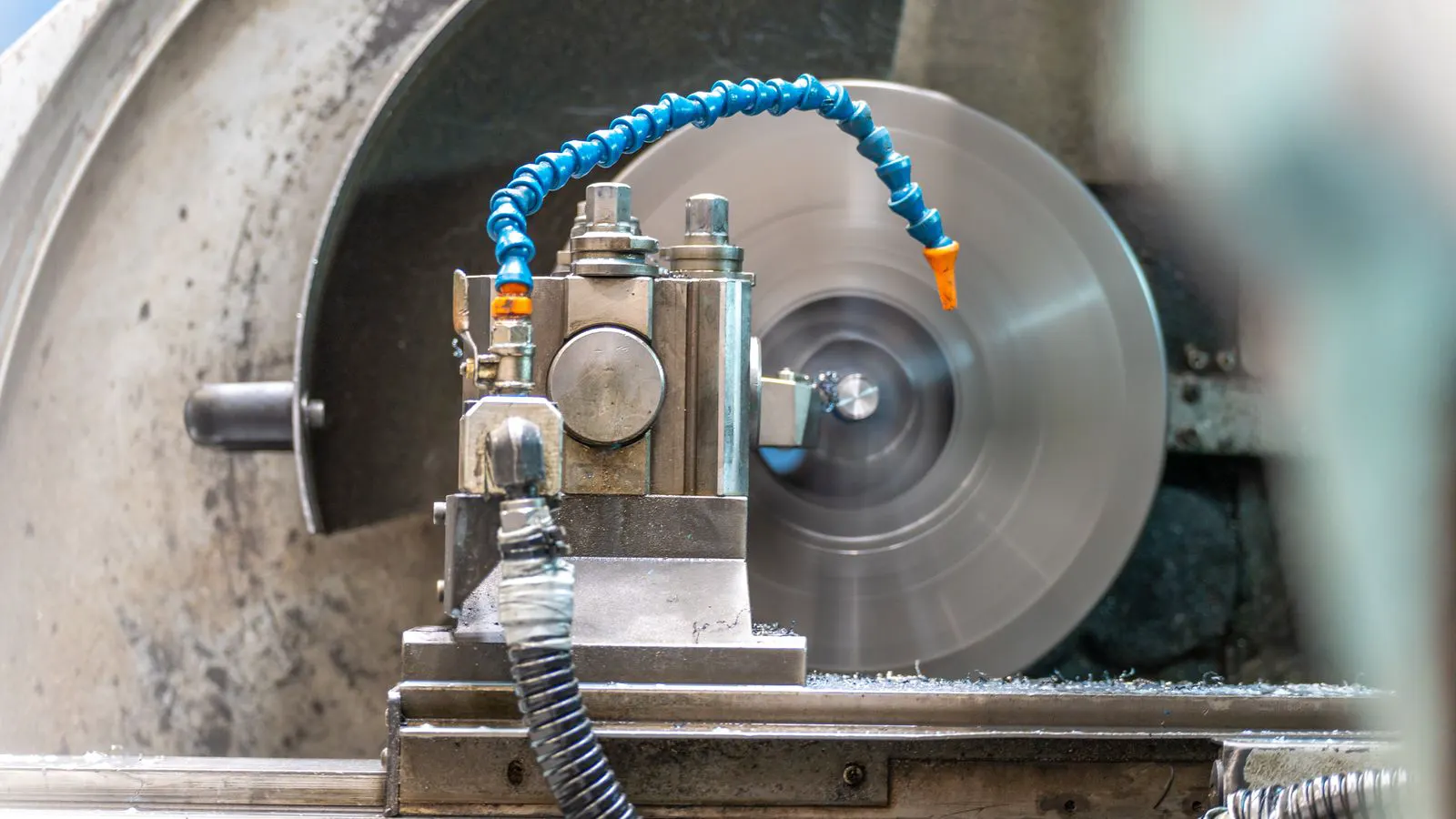
Grinding, by contrast, uses a rotating abrasive wheel or belt to remove very thin layers of material. The abrasive action polishes the surface at a microscopic level, creating a smoother, more uniform texture. This process is less about removing large volumes of material and more about refining the surface condition. For die cast parts, grinding is often chosen when the casting itself has a good shape but needs a better surface finish to meet functional or aesthetic requirements.
The choice between the two is rarely a simple either-or decision. It hinges on what the part needs to do and how it must look. A structural bracket may need tight tolerances on its mounting holes, making machining the primary focus. A decorative automotive panel, however, might require a smooth, uniform surface for painting, making grinding the better fit. Understanding these core differences is the first step in specifying the right secondary operation.
When Should You Choose Machining for Die Cast Components?
Machining is the go-to process when dimensional accuracy is the top priority. If a part has complex features, such as threaded holes, keyways, or non-circular bores, machining is almost always required. Die casting produces a part with near-net shape, but it cannot reliably produce tight tolerances on all features. Post-casting machining allows engineers to control these critical dimensions.
This approach is ideal for functional parts where fit and form are critical. For example, a die cast housing for an electronic component might need precise flatness to ensure a good seal with a gasket. Machining can achieve this with high repeatability. The process also allows for material removal where the casting may have excess material from the parting line or risers.
However, machining has limitations. The surface finish achieved is often coarser than what grinding can produce. The texture is defined by the tool marks, which can be visible on the final part. If the part will be painted, these marks may be acceptable, but for bare metal applications, they might not meet cosmetic standards. machining can introduce residual stresses, which can be a concern for high-strength parts or those subject to vibration.
When Is Grinding the Better Option for Surface Finish?
Grinding is the preferred method when the primary goal is achieving a high-quality surface finish. It is particularly effective for die cast aluminum and magnesium, which can be brittle and difficult to machine without chipping. Grinding removes material in a controlled manner, reducing the risk of fracture and producing a smooth, consistent surface.
This process is well-suited for parts that require a high level of surface uniformity. A die cast bracket that will be anodized, for instance, benefits from grinding to ensure the anodizing film develops evenly across the surface. The abrasive action also helps to remove any surface defects or porosity that might have formed during the casting process, improving the part’s overall quality.
Grinding is also a good choice when the part does not require tight dimensional tolerances on all features. If the casting already provides the correct shape and only the surface needs refinement, grinding is a more efficient and cost-effective solution than full machining. It is a targeted approach that addresses the specific need for surface quality without the overhead of complex machining operations.
Comparison Table: Machining vs. Grinding for Die Casting
| Option | Best for | Limitations |
|---|---|---|
| Machining | Tight dimensional tolerances, complex geometric features, removing excess material. | Coarser surface finish, potential for residual stress, higher setup time for complex parts. |
| Grinding | High surface finish quality, removing surface defects, working with brittle alloys. | Less effective for tight dimensional tolerances, slower material removal rate, abrasive wear. |
| Hybrid (Machining then Grinding) | Parts requiring both precise dimensions and a high surface finish. | Higher cost, longer lead time, requires careful process integration. |
| Shot Peening | Surface hardening, stress relief, improving fatigue life. | Does not remove material, cannot achieve tight dimensional tolerances, adds cost. |
| Electroplating | Corrosion resistance, decorative finish, adding wear resistance. | Adds thickness, requires precise surface preparation, can be costly for large parts. |
How to Select the Right Process Based on Part Requirements
Selecting the right secondary operation requires a clear understanding of the part’s functional and aesthetic requirements. Start by defining the critical dimensions and tolerances. If the part has features that must meet tight tolerances, machining is necessary. Then, evaluate the surface finish requirements. If the surface will be visible or subject to wear, consider grinding or a hybrid approach.
Material properties also play a significant role. Die cast aluminum is generally easier to machine than magnesium, but both can be sensitive to heat and stress. Grinding is often preferred for magnesium because it reduces the risk of cracking. For iron die castings, which are harder and more durable, machining might be more practical due to the higher cost of grinding abrasive wheels against hard materials.
Production volume is another factor. For high-volume production, the setup cost of machining must be offset by the efficiency of the process. Grinding can be faster for simple surfaces, but machining can be more efficient for complex parts. A hybrid approach might be the most cost-effective for medium-volume runs, balancing cost and quality.
Finally, consider the downstream processes. If the part will be painted, the surface finish from grinding will ensure a smoother paint job. If the part will be anodized, the uniformity of the ground surface will affect the appearance of the final finish. Integrating the secondary operation with the rest of the manufacturing process ensures that the part meets all requirements from start to finish.
Cost Considerations and Hidden Factors in Secondary Finishing
The direct cost of machining and grinding is often the first consideration, but hidden factors can significantly impact the total cost. Setup time for machining can be substantial, especially for complex parts. Each new part or change in geometry may require new tooling and programming, adding to the cost. Grinding, while often cheaper per part, can involve longer cycle times for large or complex surfaces.
Material loss is another factor. Machining removes more material than grinding, which can reduce the part’s mass and affect its performance. This is particularly important for lightweight applications, such as automotive components. The additional material removal also increases waste, which can affect environmental compliance and disposal costs.
Surface preparation is a hidden cost in both processes. If the die cast part has significant defects or porosity, additional material removal may be needed before machining or grinding can begin. This increases cycle time and cost. Conversely, a well-cast part with minimal defects can be finished more efficiently, reducing the overall cost of the secondary operation.
It is also important to consider the cost of inspection. Machined parts often require more extensive inspection to verify tolerances, which can add to the cost. Grinding parts may require less inspection if the surface finish is the primary concern. However, both processes benefit from regular quality checks to ensure consistency across production runs.
How to Specify the Finish to Your Supplier
Clear communication with your finishing supplier is critical to achieving the desired results. When specifying a die casting finishing job, provide detailed drawings that clearly mark the tolerances, surface finish requirements, and any special instructions. Ambiguity can lead to costly rework or parts that do not meet specifications.
Specify the surface finish using standard terminology, such as Ra or Rz values. These values indicate the roughness of the surface and help the supplier select the appropriate process. For example, a low Ra value may require grinding, while a higher Ra value can be achieved with machining. Also, indicate any areas that require a different finish, as a single process may not be suitable for all surfaces.
Discuss the material and any known casting defects. This information helps the supplier plan the process and anticipate potential issues. For instance, if the part is known to have porosity in a specific area, the supplier may recommend additional material removal or a different process to ensure a solid surface.
Finally, agree on a prototype or first article inspection. This allows you to verify that the process meets your requirements before full production begins. It also provides an opportunity to make adjustments if needed, saving time and money in the long run.
Final Thoughts: Choosing the Right Secondary Operation
Selecting between machining and grinding for die casting is a decision based on a combination of factors. There is no one-size-fits-all answer. The best process is the one that meets the part’s functional requirements, achieves the desired surface finish, and fits within your budget and timeline.
For parts with tight tolerances and complex features, machining is usually the best choice. For parts where surface quality is the priority, grinding is often more effective. A hybrid approach can provide the best of both worlds for many applications. By understanding the trade-offs and communicating clearly with your supplier, you can ensure that your die cast parts are finished to the highest standard.
The goal is not just to remove material, but to create a part that performs reliably and looks professional. Secondary finishing is a critical step in the die casting process, and getting it right adds significant value to the final product. By carefully selecting the right process, you can enhance the quality of your components and satisfy your customers’ expectations.
Frequently asked questions
Can I use grinding instead of machining for all die cast parts?
No, grinding is not suitable for all parts. It is less effective for achieving tight dimensional tolerances and complex geometric features, which are best handled by machining.
What is the difference in surface finish between machining and grinding?
Machining typically results in a coarser surface finish with visible tool marks. Grinding produces a smoother, more uniform surface, which is better for cosmetic applications or processes like anodizing.
Is grinding more expensive than machining?
Grinding can be more expensive for high-volume production due to longer cycle times and abrasive wear. However, it may be cheaper for low-volume runs or parts where surface finish is the primary concern.
How does material type affect the choice between machining and grinding?
Brittle alloys like magnesium are often better suited for grinding to avoid cracking. Harder materials like iron die castings may be more practical to machine due to the cost of grinding abrasive wheels against hard surfaces.
Do I need a prototype to verify the finishing process?
Yes, a prototype or first article inspection is highly recommended. It allows you to verify that the process meets your specifications before full production, saving time and cost.