Explainer: How Die Casting Capacity Affects Lead Times
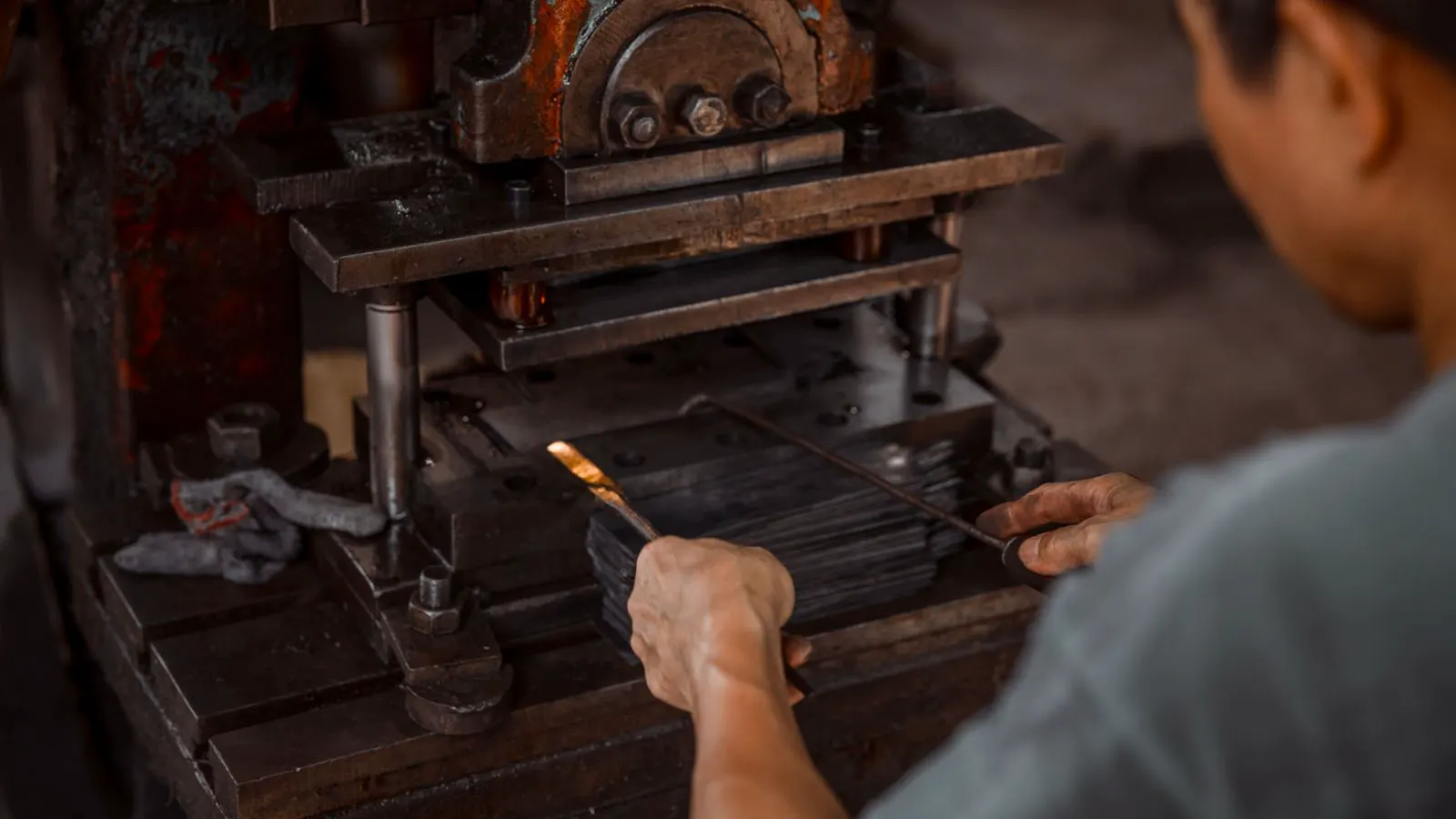
Die casting capacity determines how much volume a supplier can process per unit of time. It directly affects production lead times and limits how quickly parts move from order to delivery. Matching supplier throughput to your volume needs prevents delays and supports stable supply.
- Capacity is the rate at which a supplier can process parts, not just the size of its facility or the number of machines it owns.
- Production lead times rise when order volume approaches or exceeds a supplier's available throughput.
- Supplier throughput must be checked against your peak demand, not just your average monthly output.
- A clear capacity statement in an RFQ or contract reduces the risk of delivery delays.
- Regional sourcing can shorten lead times when capacity is already allocated near your end users.
A die casting order does not move to delivery on a fixed calendar. It moves through a queue that depends on the supplier’s die casting capacity and its current workload. When you request a part, the supplier checks three things before it can start: the tooling status, the material stock, and the open machine hours. If the tool is in the shop, the material is on hand, and the machines are free, the part enters production quickly. If any of those items is backlogged, the order waits. That waiting time is the production lead time.
What die casting capacity actually means
Die casting capacity is the maximum volume a supplier can process in a given period, usually measured in pounds per shift, parts per hour, or tons per month. It is not a single number printed on a brochure. It is a combination of machine count, machine speed, die change time, and the efficiency of the crew. A shop with ten machines does not automatically have ten times the capacity of a shop with one. The difference shows up in how quickly the shop can run a part from first shot to finished, inspected, and packed item.
Capacity also changes by material. A shop may run aluminum at one rate and magnesium at another because the machines, the dies, and the cooling cycles differ. A shop that specializes in zinc die casting may run small parts at a high rate but struggle to take on large structural aluminum parts without retooling or rebalancing the line. When you ask a supplier about capacity, ask about the specific material and part size.
How capacity constraints create lead time pressure
Production lead times are not just the time the part sits in the machine. They include the time before the die change, the time for first article inspection, the time for the heat treatment or plating line, and the time for packing and shipping. A supplier with high throughput on one part may have a long queue on another. If a new tool takes a die change slot that was already booked, the new part slips. If a maintenance window reduces available machine hours, every open order moves later.
Supplier throughput is the steady rate at which those slots are filled. When throughput is stable, the supplier can promise a lead time and hold it. When throughput is uneven, the promise stretches. A buyer who sees a two week quote should ask what is behind that number. Is the tool new? Is the material long lead? Is the shop running other programs that occupy the same machines? The answer determines whether the lead time is a fixed constraint or a variable that can be shortened.
How to read a supplier’s capacity statement
A clear capacity statement tells you what the shop can commit to and when. A weak statement says the shop has ten machines and can handle high volume. A stronger statement says the shop has three aluminum machines available for your part family, two are already booked through the end of the quarter, and the third can take a new tool after a specific date. That level of detail lets you plan.
In practice, ask for a capacity schedule for the next two to three months. Ask which machines are assigned to your material and part type. Ask what the current utilization rate is. If the shop is running at a high utilization rate, a new order may add a week or more to the lead time. If the shop has idle capacity, the order may start sooner. You do not need to see the internal production board. You need enough information to know where your order will sit in the queue.
A worked example in plain words
Imagine you need a cast aluminum bracket for a product line. You send an RFQ to three suppliers. All three can make the part. The tooling is already in the shop for two of them. The first supplier has an open die change slot in one week. The second supplier has the tool ready but the machine is running another program and will be free in three weeks. The third supplier has the tool and the machine free, but the shop is at full capacity for the next month and will need to shift another order to make room.
The first supplier’s lead time is one week for the die change, plus the production time for the first lot, plus inspection and packing. The second supplier’s lead time is three weeks for the machine, plus the same production and inspection time. The third supplier’s lead time is one month for the capacity shift, plus the same production and inspection time. The part is the same. The tool is the same. The material is the same. The difference is capacity. The buyer who looks only at the part price may choose the third supplier and miss a delivery date. The buyer who looks at capacity may choose the first supplier even if the price is slightly higher, because the delivery date is safe.
How to match capacity to your sourcing plan
Your sourcing plan should match the supplier’s throughput to your demand curve. If you have a steady monthly volume, a supplier with consistent capacity is enough. If you have seasonal peaks, a supplier with buffer capacity or the ability to run multiple shifts is better. If you are launching a new product, you need a supplier that can handle the first article run and the ramp-up without a long queue.
Do not assume that a larger shop always means faster delivery. A large shop with a long queue on your part family will deliver slower than a smaller shop with an open slot. Do not assume that a smaller shop cannot scale. A smaller shop with a dedicated line for your part may have higher effective capacity than a large shop with a shared line. The key is to know the real throughput for your part, not the general capacity of the facility.
What to put in the RFQ and the contract
An RFQ should include your target lead time and your volume forecast for the next six months. It should ask for a capacity statement that covers the material and part size. It should ask for the die change schedule and the current utilization rate for the relevant machines. It should ask for the expected production lead time from order release to finished goods, not just the machine run time.
A contract should state the expected lead time and the penalty for missing it. It should state what happens when capacity is full and whether the supplier must notify you by a certain date. It should state whether the supplier will hold capacity for you or if your order is first come, first served. These terms turn capacity from a vague promise into a measurable commitment.
| Capacity factor | What it tells you | How it affects your order |
|---|---|---|
| Machine availability | Whether the right machine is free | Determines the start date |
| Die change slot | When the tool can be loaded | Adds time before first shot |
| Material stock | Whether the alloy is on hand | Adds lead time if the metal must be purchased |
| Utilization rate | How full the shop’s schedule is | Affects queue length and delivery reliability |
| Shift coverage | Whether the shop runs one or multiple shifts | Affects total parts per week |
| Quality hold time | How long inspection and sorting take | Adds time after the machine run |
How to reduce lead time risk
The simplest way to reduce lead time risk is to know the queue. Ask the supplier what is ahead of your order. Ask what happens if a die fails during a change. Ask what the backup plan is for a material shortage. A supplier that can answer these questions clearly has a production system that can hold a lead time. A supplier that gives vague answers is likely to miss the date.
You can also reduce risk by splitting your volume. If you need ten thousand parts per month, split the order into two five thousand part lots. If one lot is delayed, the second lot may still arrive on time. If you need a single large lot, ask the supplier to start the first article run early so the tool is proven before the full run. If you are in a region with multiple suppliers, keep at least one qualified source as a backup. Regional sourcing can shorten lead times when the capacity is already near your plant or your end user.
Capacity is not a number you negotiate down. It is a constraint you manage. When you understand the supplier’s throughput, the die change schedule, and the material stock, you can build a sourcing plan that holds delivery. When you do not, every order becomes a gamble on a queue you cannot see.
Frequently asked questions
How do I know if a supplier has enough die casting capacity for my order?
Ask for a capacity statement that covers the specific material and part size. Request the machine availability, the die change schedule, and the current utilization rate for the next two to three months.
What is the difference between production lead time and machine run time?
Machine run time is the time the part is in the die casting machine. Production lead time includes die change, material prep, first article inspection, finishing, and shipping.
Can a supplier increase throughput by adding more machines?
Adding machines can increase throughput, but only if the shop has the dies, the material, the crew, and the quality processes to run them. The new machines must be available for your part family.
What should I do if a supplier says its capacity is full?
Ask for the date when capacity will open. Ask if a smaller first lot can be run now and the balance later. Ask if a second qualified supplier can cover the gap.
How often should I review a supplier's capacity?
Review it at least once a month for active programs and once a quarter for your sourcing plan. Review it again when your volume changes, a new tool is added, or a new supplier is qualified.


